
Introduction
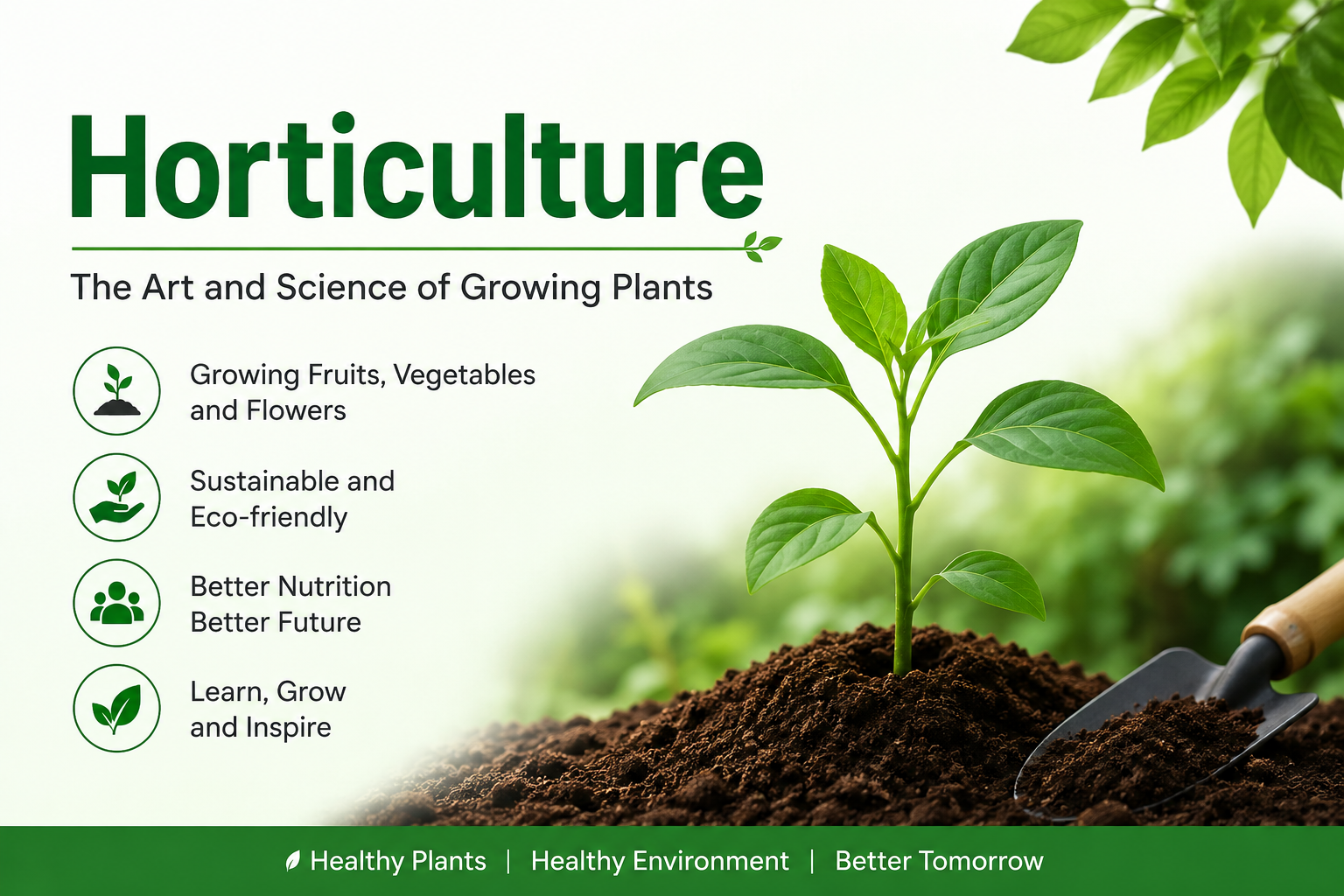
Horticulture is one of the most important branches of agriculture that deals with the cultivation, production, processing, and marketing of fruits, vegetables, flowers, medicinal plants, and ornamental crops. As agriculture continues to evolve with modern technologies and sustainable farming practices, horticulture has emerged as a highly profitable and employment-oriented sector.
For agriculture students, understanding horticulture is essential because it offers diverse career opportunities, supports food security, and contributes significantly to the agricultural economy.
What is Horticulture?
Horticulture is the science and art of growing fruits, vegetables, flowers, spices, plantation crops, and ornamental plants. Unlike traditional field crops, horticultural crops generally require intensive management, specialized cultivation practices, and higher levels of care to achieve quality production.
The word “horticulture” is derived from two Latin words:
- Hortus meaning garden
- Cultura meaning cultivation
Therefore, horticulture literally means the cultivation of garden crops.
Major Branches of Horticulture
1. Pomology (Fruit Science)
Pomology deals with the cultivation, production, harvesting, and management of fruit crops.
Examples:
- Mango
- Banana
- Guava
- Apple
- Orange
- Papaya
2. Olericulture (Vegetable Science)
Olericulture focuses on vegetable crop production and management.
Examples:
- Tomato
- Potato
- Onion
- Cabbage
- Cauliflower
- Brinjal
3. Floriculture
Floriculture involves the cultivation of flowers and ornamental plants for commercial and decorative purposes.
Examples:
- Rose
- Marigold
- Chrysanthemum
- Gerbera
- Lily
4. Landscape Horticulture
This branch deals with the planning, design, and maintenance of gardens, parks, lawns, and green spaces.
5. Plantation Crops
Includes the cultivation of long-duration commercial crops such as:
- Coconut
- Tea
- Coffee
- Arecanut
- Rubber
6. Medicinal and Aromatic Crops
These crops are grown for pharmaceutical, cosmetic, and industrial uses.
Examples:
- Aloe Vera
- Ashwagandha
- Tulsi
- Lemongrass
- Mint
Importance of Horticulture
Enhances Nutritional Security
Fruits and vegetables provide essential vitamins, minerals, antioxidants, and dietary fiber that are important for human health.
Generates Higher Income
Horticultural crops often provide better returns per unit area compared to traditional field crops.
Creates Employment
Activities such as nursery management, protected cultivation, floriculture, and post-harvest processing generate significant employment opportunities.
Supports Export Earnings
Many horticultural products are exported worldwide, contributing to national income and foreign exchange earnings.
Improves Environmental Sustainability
Trees, gardens, and green landscapes help reduce pollution, conserve biodiversity, and improve ecological balance.
Modern Technologies in Horticulture
Agriculture students should be familiar with modern horticultural technologies such as:
- Drip irrigation systems
- Greenhouse cultivation
- Polyhouse farming
- Hydroponics
- Vertical farming
- Precision agriculture
- Smart irrigation systems
- Remote sensing and IoT-based monitoring
These technologies improve productivity, reduce resource wastage, and increase profitability.
Career Opportunities for Agriculture Students
Horticulture offers numerous career options, including:
- Horticulture Officer
- Agricultural Extension Officer
- Nursery Manager
- Floriculture Specialist
- Fruit Production Expert
- Vegetable Production Consultant
- Landscape Designer
- Greenhouse Manager
- Research Scientist
- Agricultural Entrepreneur
Students can also establish their own nurseries, fruit orchards, vegetable farms, or floriculture businesses.
Challenges in Horticulture
Despite its benefits, horticulture faces several challenges:
- Climate change and extreme weather events
- Pest and disease outbreaks
- Post-harvest losses
- Market price fluctuations
- Limited storage and transportation facilities
Addressing these challenges requires scientific management, technological adoption, and proper planning.
Conclusion
Horticulture is a rapidly growing sector that combines science, technology, and entrepreneurship. For agriculture students, it provides excellent opportunities for career growth, research, innovation, and business development. By learning modern horticultural practices and adopting sustainable cultivation methods, future agricultural professionals can contribute significantly to food security, environmental conservation, and rural development.
