
Introduction
Fumigation is one of the most effective pest control methods used in agriculture, warehouses, food storage facilities, and commercial buildings. It helps eliminate insects, rodents, termites, and other harmful pests that can damage crops, stored grains, and property.
In modern agriculture, fumigation plays a crucial role in protecting harvested produce, maintaining food quality, and preventing economic losses caused by pest infestations. Farmers, grain storage managers, and agricultural businesses rely on fumigation to ensure safe and pest-free storage conditions.
What is Fumigation?
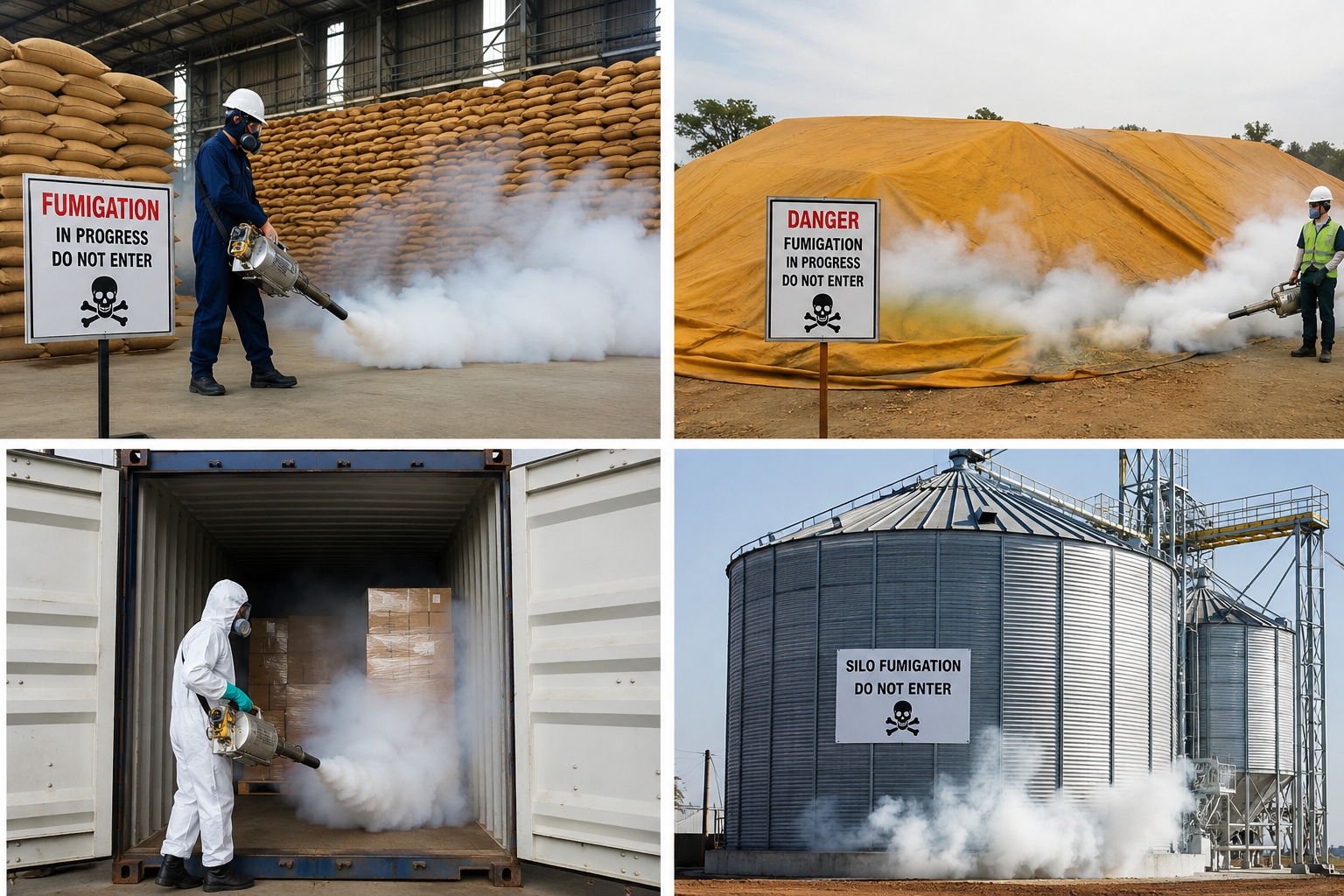
Fumigation is a pest control process that involves the use of fumigants (gaseous pesticides) to eliminate insects, pests, rodents, and microorganisms from a specific area. The treatment is carried out in an enclosed space where the fumigant gas can spread evenly and penetrate cracks, crevices, stored products, and hidden pest habitats.
Unlike conventional spraying methods, fumigation reaches areas that are difficult to access, making it highly effective against large-scale infestations.
Why is Fumigation Important?
Fumigation is essential for protecting agricultural products and maintaining hygiene standards. Its key benefits include:
1. Protects Stored Grains
- Prevents damage caused by grain borers, weevils, and beetles.
- Maintains grain quality during long-term storage.
- Reduces post-harvest losses.
2. Controls Pest Infestations
- Eliminates insects at all life stages.
- Targets hidden pests that are difficult to detect.
- Provides comprehensive pest control.
3. Ensures Food Safety
- Helps maintain the quality of food products.
- Reduces contamination risks.
- Supports compliance with food safety standards.
4. Protects Infrastructure
- Controls termites and wood-destroying insects.
- Prevents structural damage to warehouses and buildings.
Types of Fumigation
1. Agricultural Fumigation
Used in farms, grain silos, and storage facilities to protect crops and stored produce from insects and pests.
2. Warehouse Fumigation
Protects stored commodities such as:
- Wheat
- Rice
- Maize
- Pulses
- Spices
- Dry fruits
3. Container Fumigation
Used for export and import shipments to prevent the spread of invasive pests across countries.
4. Structural Fumigation
Applied in homes, offices, warehouses, and commercial buildings to eliminate termites and other pests.
5. Soil Fumigation
Used before planting to control soil-borne pests, diseases, nematodes, and weeds.
Common Pests Controlled Through Fumigation
Fumigation is effective against:
- Grain Weevils
- Rice Weevils
- Flour Beetles
- Grain Borers
- Moths
- Cockroaches
- Bed Bugs
- Termites
- Rodents
- Ants
How Does the Fumigation Process Work?
Step 1: Inspection
Experts inspect the site to identify the type and severity of pest infestation.
Step 2: Sealing the Area
The area is tightly sealed to prevent gas leakage.
Step 3: Application of Fumigant
Approved fumigants are introduced into the enclosed area.
Step 4: Exposure Period
The fumigant remains in the area for a specific duration to ensure complete pest control.
Step 5: Ventilation
After treatment, the area is ventilated thoroughly to remove residual gases.
Step 6: Safety Clearance
The site is tested and declared safe for re-entry and use.
Advantages of Fumigation
1. Provides complete pest eradication
2. Reaches hidden pest locations
3. Effective for large storage facilities
4. Protects agricultural commodities
5. Reduces post-harvest losses
6. Improves storage hygiene
7. Supports international trade requirements
Safety Measures During Fumigation
To ensure safe fumigation practices:
- Only trained professionals should conduct fumigation.
- Follow all safety guidelines and regulations.
- Use approved fumigants.
- Restrict entry during treatment.
- Ensure proper ventilation after fumigation.
- Wear appropriate protective equipment.
Fumigation in Modern Agriculture
With increasing food storage requirements and global trade, fumigation has become a vital component of modern agriculture. It helps farmers and agribusinesses:
- Preserve crop quality.
- Reduce storage losses.
- Improve food security.
- Meet export standards.
- Increase profitability.
By integrating fumigation with good storage practices and integrated pest management (IPM), farmers can achieve better protection of their agricultural products.
Conclusion
Fumigation is a powerful and effective pest management technique that helps protect crops, stored grains, warehouses, and commercial facilities from harmful pests. When performed correctly by trained professionals, fumigation ensures better storage conditions, reduces economic losses, and supports sustainable agricultural practices.
For farmers, warehouse operators, and agribusinesses, regular fumigation is an important step toward maintaining quality, safety, and productivity in agricultural operations.
Types of Fumigation: A Complete Guide for Agriculture and Pest Management
Fumigation is an effective pest control method used to eliminate insects, rodents, termites, and other harmful organisms from agricultural fields, warehouses, storage facilities, and buildings. Depending on the purpose and location, fumigation can be classified into several types.
1. Agricultural Fumigation
Agricultural fumigation is used to protect crops and agricultural produce from pests and diseases.
Applications:
- Grain storage facilities
- Silos
- Warehouses
- Seed storage units
Benefits:
- Prevents post-harvest losses
- Protects crop quality
- Controls storage pests
2. Soil Fumigation
Soil fumigation involves treating the soil before planting to eliminate harmful organisms.
Controls:
- Nematodes
- Soil-borne fungi
- Bacteria
- Weed seeds
Benefits:
- Improves soil health
- Enhances crop growth
- Increases yield potential
3. Warehouse Fumigation
Warehouse fumigation is performed in storage facilities to protect stored commodities.
Common Commodities:
- Wheat
- Rice
- Maize
- Pulses
- Spices
- Dry fruits
Benefits:
- Prevents pest infestation
- Maintains product quality
- Reduces storage losses
4. Container Fumigation
Container fumigation is used for export and import shipments to ensure goods are pest-free.
Applications:
- Shipping containers
- Export commodities
- International trade goods
Benefits:
- Meets international quarantine standards
- Prevents pest spread across borders
- Protects cargo quality
5. Structural Fumigation
Structural fumigation is conducted in buildings and enclosed structures.
Controls:
- Termites
- Cockroaches
- Bed bugs
- Wood-boring insects
Applications:
- Homes
- Offices
- Hotels
- Commercial buildings
Benefits:
- Complete pest elimination
- Protects property from damage
6. Tarpaulin (Cover) Fumigation
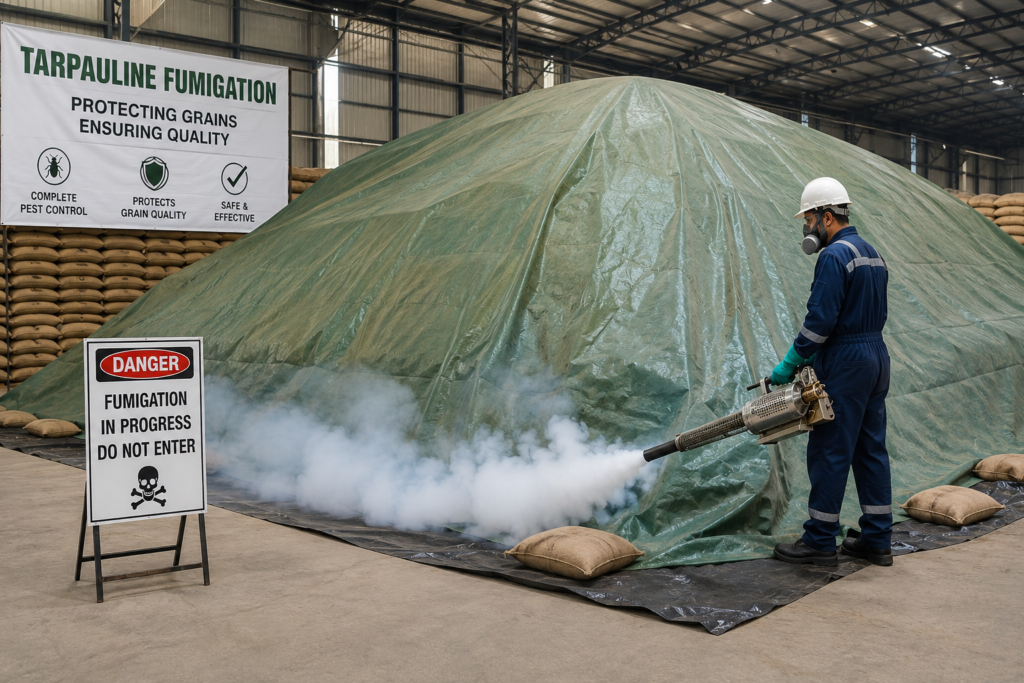
In this method, commodities are covered with gas-proof sheets or tarpaulins before fumigation.
Applications:
- Grain stacks
- Bagged commodities
- Agricultural produce
Benefits:
- Cost-effective
- Suitable for temporary storage
- Easy to implement
7. Vacuum Fumigation
Vacuum fumigation is performed in specially designed chambers where air is removed before introducing fumigants.
Benefits:
- Faster penetration of fumigants
- More effective pest control
- Reduced treatment time
Common Uses:
- High-value commodities
- Research facilities
8. Chamber Fumigation
This method is carried out in sealed chambers specifically designed for fumigation.
Applications:
- Seeds
- Food products
- Export materials
Benefits:
- Controlled environment
- High treatment efficiency
- Safe operation
9. Ship Fumigation
Ship fumigation is conducted on vessels carrying bulk agricultural commodities.
Common Commodities:
- Wheat
- Rice
- Corn
- Soybeans
Benefits:
- Protects cargo during transportation
- Prevents infestation during long voyages
10. Silo Fumigation
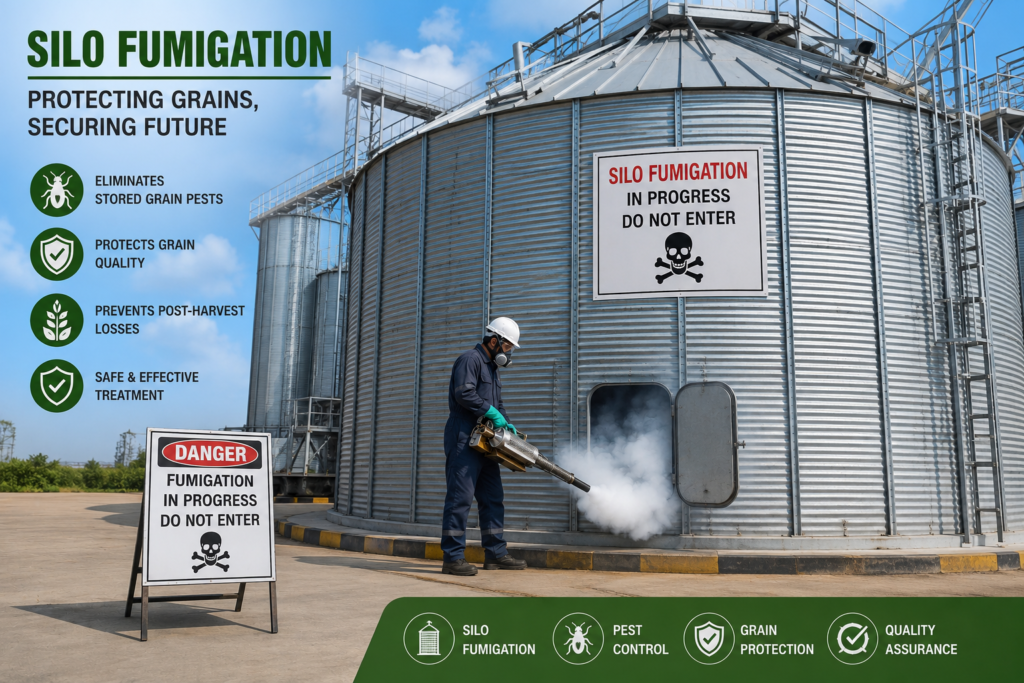
Silo fumigation is used to protect large quantities of stored grains.
Benefits:
- Long-term pest control
- Reduced grain losses
- Better storage management
Commonly Stored Crops:
- Wheat
- Rice
- Maize
- Barley
Common Fumigants Used
Some widely used fumigants include:
- Phosphine Gas
- Methyl Bromide (restricted in many countries)
- Sulfuryl Fluoride
- Carbon Dioxide (controlled atmosphere fumigation)
Note: Fumigants should only be handled by trained and licensed professionals following safety regulations.
Conclusion
Different types of fumigation are used depending on the commodity, storage condition, and pest problem. Agricultural fumigation, soil fumigation, warehouse fumigation, container fumigation, structural fumigation, and silo fumigation are among the most common methods used worldwide. Choosing the right fumigation technique helps protect crops, stored products, and infrastructure while reducing economic losses caused by pests.
How the Fumigation Process Works
Fumigation is a carefully planned pest control procedure that eliminates insects and other harmful pests from stored products, warehouses, containers, and agricultural facilities. The process is carried out by trained professionals to ensure maximum effectiveness and safety.
1. Site Inspection and Assessment
Before fumigation begins, experts inspect the area to:
- Identify the type of pest infestation.
- Determine the level of infestation.
- Assess the size and condition of the treatment area.
- Select the appropriate fumigant and treatment method.
2. Preparation of the Area
The fumigation site is prepared by:
- Removing unauthorized personnel and animals.
- Covering or securing sensitive equipment.
- Arranging commodities for effective gas circulation.
- Posting warning signs around the treatment area.
3. Sealing the Structure
The area is tightly sealed using gas-proof sheets, tarpaulins, or other sealing materials to prevent fumigant leakage and ensure proper gas concentration.
4. Application of the Fumigant
The selected fumigant is introduced into the sealed area. The gas spreads throughout the space and penetrates:
- Grain stacks
- Storage bags
- Cracks and crevices
- Hidden pest habitats
5. Exposure Period
The fumigant remains inside the sealed area for a specified period, typically ranging from several hours to a few days, depending on:
- Type of pest
- Temperature
- Commodity being treated
- Fumigant used
During this stage, the gas kills pests at all life stages, including eggs, larvae, pupae, and adults.
6. Aeration and Ventilation
After the exposure period, the area is opened and thoroughly ventilated to remove any remaining fumigant gases. Proper aeration ensures the environment becomes safe for re-entry.
7. Monitoring and Safety Checks
Professionals use gas detection equipment to verify that fumigant levels have fallen below safety limits before allowing people to enter the treated area.
8. Final Inspection and Clearance
A final inspection is conducted to:
- Confirm successful pest control.
- Ensure the area is safe for use.
- Provide recommendations for future pest prevention.
Benefits of Proper Fumigation
1. Complete pest elimination
2. Protection of stored grains and commodities
3. Reduced post-harvest losses
4. Improved food quality and safety
5. Long-term storage protection
When performed correctly, fumigation is one of the most effective methods for safeguarding agricultural products, warehouses, and storage facilities from damaging pest infestations.
Common Applications of Fumigation
Fumigation is widely used across agriculture, food storage, logistics, and commercial sectors to control pests and protect valuable products. Some of the most common applications include:
1. Grain Storage Facilities
Fumigation is extensively used in:
- Grain warehouses
- Silos
- Storage godowns
It helps protect stored wheat, rice, maize, barley, and other grains from insects such as weevils, beetles, and moths.
2. Agricultural Produce Storage
Farmers and agribusinesses use fumigation to safeguard:
- Pulses
- Oilseeds
- Spices
- Dry fruits
- Seeds
This prevents quality deterioration and economic losses during storage.
3. Export and Import Shipments
Fumigation is often required for international trade to ensure products are free from pests before transportation.
Commonly fumigated items include:
- Agricultural commodities
- Wooden packaging materials
- Shipping containers
- Export cargo
4. Warehouses and Distribution Centers
Large warehouses use fumigation to maintain pest-free storage environments and protect goods from contamination and damage.
5. Food Processing Industries
Food manufacturing and processing facilities use fumigation to control pests that may contaminate:
- Flour
- Cereals
- Processed foods
- Packaged products
6. Shipping Containers
Container fumigation helps eliminate pests hidden inside cargo and prevents the spread of invasive species across countries.
7. Structural Pest Control
Fumigation is used in:
- Residential buildings
- Commercial properties
- Hotels
- Offices
It effectively controls termites, bed bugs, cockroaches, and other difficult-to-eradicate pests.
8. Soil Treatment in Agriculture
Soil fumigation is applied before planting to control:
- Nematodes
- Soil-borne diseases
- Harmful fungi
- Certain weed seeds
This promotes healthier crop growth and higher yields.
9. Timber and Wooden Products
Wooden pallets, furniture, logs, and timber products are fumigated to eliminate wood-boring insects and comply with export regulations.
10. Ships and Bulk Cargo Storage
Bulk agricultural commodities transported by ships are fumigated to prevent infestations during long-distance transportation and storage.
Key Benefits Across Applications
1. Protects crops and stored products
2. Prevents pest-related losses
3. Maintains product quality
4. Supports food safety standards
5. Meets quarantine and export requirements
6. Enhances long-term storage efficiency
Fumigation remains an essential pest management solution for agriculture, warehousing, logistics, and commercial industries, helping ensure product safety, quality, and profitability.
